What Is the Shan Hai Jing? — The Classic of Mountains and Seas, Explained
It is older than most religions, stranger than most fantasy, and it is the actual source of the guardians we match people to. Here is what the Classic of Mountains and Seas is, in plain terms.
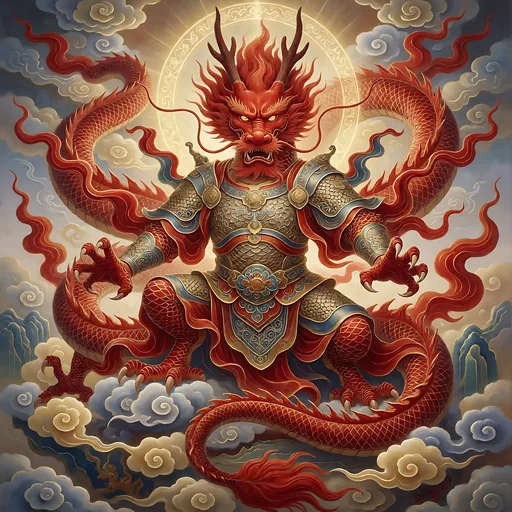
The Shan Hai Jing — in English, the Classic of Mountains and Seas — is a text compiled around the 4th century BCE, in the centuries before the unification of the region it describes. It is part geography, part bestiary, part ritual manual: the known world described mountain by mountain, sea by sea, with the creatures, plants, minerals and omens of each region listed as you go.
What is actually inside
The classic is organized into the Classic of Mountains and the Classic of Seas — five mountain chains and four sea regions, plus the wilderness chapters. Each entry follows a pattern: a mountain, its resources, and its creatures. A typical passage names a beast, describes its appearance, and states what its appearance means — blessing or disaster. That last clause is what separates a guardian from a monster, and it is why the text can be read as a field guide rather than a list of horrors.
Its bestiary is enormous: hundreds of creatures, from the plausible to the impossible. Fox spirits with nine tails. A serpent with a human face. Birds whose cry foretells drought. A steed that runs a thousand li in a day. And among them, the creatures whose appearance is always good news — the auspicious guardians.
Why it still matters
Almost every creature you have met in games, dramas and fantasy art traces back to this text — usually through three or four layers of later retelling that sanded off the original meaning. Reading the source restores the original: the nine-tailed fox is a guardian of family, not a temptress. The dragon commands day and night, not treasure hoards. The originals are stranger, and more useful.
The 45 guardians
Our library keeps only the auspicious side of the ledger — 45 guardian beasts whose appearances foretell blessing: peace, harvest, progeny, protection, clarity, momentum. Each is tagged with the element and direction the classic itself assigns it, which is what makes deterministic matching possible: your birth date and intent select one beast, the same way, every time.
And each guardian arrives with its provenance card — the chapter and the original passage it is drawn from — so the lineage is verifiable, not just claimed.
Meet your guardian from the classic
Your birth date, your name, and what you seek — read through the Classic of Mountains and Seas. Free to see your result.
Find My Guardian — FreeSpirit Beast is an independent studio. Artwork is AI-assisted and human-curated, every creature drawn from the public-domain Shan Hai Jing. Privacy · Terms · Spirit animal vs guardian beast · Read next: Creatures of the Shan Hai Jing — A Field Guide · Spirit Animal by Birthday — What Your Birth Date Actually Points To · How to Find Your Spirit Animal — 5 Steps That Actually Work